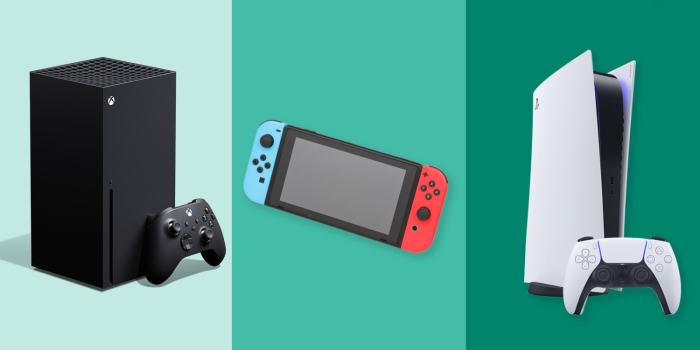
Step into the world of Game Consoles where pixels meet passion, controllers conquer, and gameplay reigns supreme. From the classics to the cutting-edge, this overview will unravel the mysteries and magic of gaming’s beloved consoles.
Get ready to dive deep into the evolution, features, impact, and differences that define the realm of Game Consoles.
Game Consoles

Game consoles have come a long way since their inception, evolving from simple 2D games to complex high-definition experiences. Let’s explore the journey of game consoles and their impact on the gaming industry.
Evolution of Game Consoles
- Early game consoles like the Magnavox Odyssey introduced basic games like Pong in the 1970s.
- The Nintendo Entertainment System (NES) revolutionized gaming in the 1980s with iconic titles like Super Mario Bros.
- The PlayStation 1 brought CD-ROM technology to consoles, enhancing graphics and gameplay in the 1990s.
- Xbox 360 and PlayStation 3 marked the era of online gaming and multimedia integration in the 2000s.
- Today, consoles like PlayStation 5 and Xbox Series X/S offer 4K gaming, ray tracing, and lightning-fast load times.
Popular Game Consoles Comparison
- PlayStation: Known for exclusive titles like God of War and Horizon Zero Dawn, with a strong focus on single-player experiences.
- Xbox: Offers services like Xbox Game Pass and Xbox Live, emphasizing online multiplayer gaming and backward compatibility.
- Nintendo Switch: Combines handheld and home console gaming, with innovative titles like The Legend of Zelda: Breath of the Wild.
Impact of Game Consoles on the Gaming Industry
- Game consoles have pushed technological boundaries, driving advancements in graphics, processing power, and user experience.
- They have created a booming market for game developers, leading to a diverse range of titles catering to different audiences.
- Consoles have also fostered online communities, enabling players to connect, compete, and collaborate in virtual worlds.
Differences Between Handheld and Home Game Consoles
- Handheld Consoles: Portable devices like the Nintendo DS and PlayStation Portable, allowing gaming on the go.
- Home Consoles: Stationary systems like PlayStation and Xbox, designed for immersive gaming experiences on a big screen.
- Handheld consoles often prioritize compact size and battery life, while home consoles focus on performance and visual quality.
Card Games
Card games have a rich history dating back centuries and are an integral part of various cultures around the world. They have been used for entertainment, gambling, and even educational purposes. The simplicity of a deck of cards allows for endless possibilities and variations, making card games versatile and popular among people of all ages.
History of Card Games
Card games originated in China during the 9th century and spread to Europe in the late 14th century. The first known deck of playing cards was created in the 1300s and featured four suits – hearts, diamonds, clubs, and spades. Over time, different regions developed their own variations of card games, leading to a diverse range of games played worldwide.
Popular Card Games and Rules
- Poker: A game of skill and strategy where players bet based on the value of their hand.
- Bridge: A trick-taking game played with a standard deck of 52 cards.
- UNO: A family-friendly game where players match colors and numbers to be the first to empty their hand.
Benefits of Playing Card Games
Playing card games offers numerous cognitive benefits, including improved memory, concentration, and problem-solving skills. It also promotes social interaction and can reduce stress levels. Card games require quick thinking and decision-making, helping to keep the mind sharp and active.
Traditional vs. Modern Card Games
| Traditional Card Games | Modern Digital Versions |
|---|---|
| Played with physical cards | Available as mobile apps or online games |
| Encourage face-to-face interaction | Allow for remote gameplay with friends or strangers |
| Often passed down through generations | Constantly evolving with new features and updates |
Racing Games
Racing games have come a long way from their origins in arcades to the highly realistic simulators we see today. These games have not only entertained gamers for decades but also played a significant role in the advancement of gaming technology.
Evolution of Racing Games
- Arcade Racing: Racing games initially started in arcades with simple gameplay and graphics, attracting players with fast-paced action.
- Console Racing: With the rise of home consoles, racing games became more accessible to a wider audience, introducing franchises like Mario Kart and Gran Turismo.
- Realistic Simulators: Today, racing games offer incredibly realistic graphics, physics, and mechanics, providing players with immersive experiences.
Popular Racing Game Franchises
- Need for Speed: Known for its high-speed races, customization options, and thrilling gameplay, Need for Speed has been a staple in the racing genre for years.
- Gran Turismo: Renowned for its attention to detail, realistic driving mechanics, and extensive car collection, Gran Turismo has set the standard for racing simulators.
Impact on Gaming Technology
- Graphics and Physics: Racing games have pushed the boundaries of graphics and physics engines, leading to advancements in visual fidelity and realistic gameplay.
- Virtual Reality: The integration of virtual reality technology in racing games has further enhanced immersion, allowing players to feel like they are truly behind the wheel.
Role in Esports Competitions
- Competitive Scene: Racing games have become a prominent fixture in esports competitions, with players showcasing their skills in tournaments and leagues.
- Community Engagement: Esports events for racing games bring together a dedicated community of fans and players, fostering a sense of camaraderie and sportsmanship.
Online Games
Online games have become a popular form of entertainment, allowing players to connect with others from around the world in virtual environments. Let’s explore the different genres, social aspects, risks, benefits, and revenue models associated with online gaming.
Genres of Online Games
- MMORPGs (Massively Multiplayer Online Role-Playing Games): These games involve large numbers of players interacting in a persistent online world.
- MOBAs (Multiplayer Online Battle Arenas): MOBAs are team-based games where players compete against each other in strategic battles.
- Battle Royales: In these games, players fight to be the last one standing in a shrinking play area.
Social Aspects of Online Gaming
- Playing with Friends: Online games provide a platform for friends to connect and play together, even when physically apart.
- Playing with Strangers: Online gaming allows players to meet new people and form friendships through shared gameplay experiences.
Risks and Benefits of Online Gaming Communities
- Risks: Online gaming communities can sometimes be toxic environments with cyberbullying, harassment, and scams.
- Benefits: Online gaming communities can foster teamwork, communication skills, and a sense of belonging for players.
Revenue Models of Online Games
- Free-to-Play: Free-to-play games generate revenue through in-game purchases, advertisements, and optional subscriptions.
- Pay-to-Play: Pay-to-play games require an upfront purchase or subscription fee to access the full game content without additional purchases.
Games Download
Downloading games has become a popular way for gamers to access their favorite titles quickly and conveniently. Let’s dive into the process of downloading games on platforms like Steam, PlayStation Store, and Xbox Live, along with tips for optimizing download speeds and managing game libraries.
Downloading Games on Different Platforms
- Steam: To download games on Steam, simply purchase the game through the platform and click on the “Install” button. The game will start downloading to your library.
- PlayStation Store: On PlayStation Store, navigate to the game you want to download, purchase it, and then select “Download” to start the process.
- Xbox Live: Similarly, on Xbox Live, find the game you wish to download, buy it, and initiate the download from your library.
Optimizing Download Speeds and Managing Libraries
- Ensure a stable internet connection to maximize download speeds and prevent interruptions.
- Pause any other downloads or streaming activities to allocate more bandwidth to your game download.
- Regularly organize your game library by categorizing games into folders or collections based on genre or play frequency.
Impact of Digital Downloads on Physical Game Sales
Digital downloads have revolutionized the gaming industry by offering instant access to games without the need for physical discs. This shift has impacted physical game sales, with many gamers opting for the convenience of downloading games directly to their devices.
Advantages and Disadvantages of Downloading Games vs. Buying Physical Discs
- Advantages: Instant access to games, no need for physical storage space, convenience of downloading from anywhere.
- Disadvantages: Dependence on stable internet connection, limited resale value compared to physical copies, potential risk of losing access to games if platforms shut down.
Mobile Casual Games
Mobile casual games have become incredibly popular on smartphones and tablets, attracting a wide range of players from different age groups. These games are designed to be easy to pick up and play, making them accessible to both casual and hardcore gamers alike.
Popularity and Target Audience
Casual games on mobile devices have gained popularity due to their convenience and simplicity. They often target a broad audience, including casual gamers looking for a quick gaming fix, as well as busy individuals seeking entertainment during short breaks. The accessibility of these games on mobile platforms has made them a go-to choice for many users.
Addictive Nature and Design Elements
Mobile casual games are known for their addictive nature, often incorporating gameplay mechanics that encourage players to keep coming back for more. Elements such as reward systems, social features, and simple controls contribute to the addictive nature of these games. Developers carefully design these games to keep players engaged and motivated to progress further.
Revenue Models
Mobile casual games typically generate revenue through in-app purchases and advertisements. In-app purchases allow players to buy virtual items or upgrades within the game, while ads provide developers with a source of income. Some games offer a combination of both revenue models to maximize profitability.
Successful Examples and Gameplay Mechanics
Examples of successful mobile casual games include “Candy Crush Saga,” “Angry Birds,” and “Clash of Clans.” These games feature engaging gameplay mechanics such as match-three puzzles, physics-based challenges, and strategy elements. Players are often drawn to these games due to their addictive gameplay, social interactions, and competitive aspects.
Console Systems
Console systems have been a staple in the gaming industry, providing unique gaming experiences to players around the world. Let’s delve into the world of console gaming and explore the different aspects that make each system stand out.
Hardware Specifications and Exclusive Titles
When comparing console systems, one of the key factors to consider is their hardware specifications. Each major console manufacturer – Sony, Microsoft, and Nintendo – offers consoles with varying capabilities in terms of processing power, graphics performance, and storage capacity. These differences can impact the overall gaming experience and the quality of games that can be played on each system.Exclusive titles are another important aspect to consider when choosing a console.
Each manufacturer has its own lineup of exclusive games that can only be played on their respective systems. These exclusive titles often serve as a major selling point for consoles, attracting players who are fans of specific game franchises or genres.
Rivalry Between Major Console Manufacturers
The rivalry between major console manufacturers, namely Sony, Microsoft, and Nintendo, has been a driving force in the gaming industry for decades. Each company competes for market share, striving to attract players with innovative features, exclusive titles, and competitive pricing. This healthy competition has led to advancements in console technology and a diverse range of gaming experiences for players to enjoy.
Backward Compatibility
Backward compatibility is a feature that allows players to play games from previous console generations on newer hardware. This feature is important for console gamers who want to revisit classic titles or continue playing their existing game library on the latest consoles. Manufacturers like Microsoft and Sony have implemented backward compatibility in their recent console releases, enhancing the overall value of their platforms.
Role of Cloud Gaming Services
Cloud gaming services are poised to play a significant role in the future of console systems. These services allow players to stream games over the internet, eliminating the need for expensive hardware upgrades and physical game discs. Companies like Microsoft with Xbox Game Pass and Sony with PlayStation Now are leading the way in cloud gaming, offering players a new way to access and play their favorite games.
Computer Games
Computer games have become a staple in the gaming industry, offering a unique gaming experience that differs from traditional console gaming.The key differences between PC gaming and console gaming lie in the hardware and software used to play games. While consoles are dedicated gaming devices with fixed specifications, PCs offer more flexibility in terms of customization and upgradability. This allows PC gamers to adapt their systems to meet the demands of the latest games, resulting in potentially higher performance and graphical fidelity.
Advantages of Gaming on a Computer
- Graphics: One of the major advantages of gaming on a computer is the ability to achieve higher graphical fidelity and frame rates compared to consoles. PCs with powerful graphics cards can deliver stunning visuals and immersive gaming experiences.
- Customization: PC gamers have the freedom to customize their gaming setups according to their preferences. From choosing components like processors and graphics cards to tweaking in-game settings, the level of customization in PC gaming is unmatched.
Impact of Esports on Computer Games
- The rise of esports has significantly contributed to the popularity of computer games. Competitive gaming events attract millions of viewers worldwide, showcasing the skill and strategy involved in popular titles like League of Legends, Counter-Strike, and Dota 2.
- Esports has turned computer gaming into a legitimate form of professional competition, with players earning sponsorships, prize money, and recognition on a global scale. This has helped elevate the status of computer games in the mainstream entertainment industry.
Indie Games in the Computer Gaming Industry
- Indie games, developed by small independent studios or individuals, have made a significant impact in the computer gaming industry. These games often explore unique concepts, art styles, and gameplay mechanics that may not be found in mainstream titles.
- Indie games have gained a loyal following among gamers looking for fresh and innovative experiences. The success of indie titles like “Celeste,” “Hollow Knight,” and “Undertale” has demonstrated the importance of creativity and originality in the computer gaming landscape.
Online Games Adventure
Adventure games in the online gaming space offer players a unique and immersive experience, combining storytelling elements with engaging gameplay mechanics. These games often involve exploration, puzzle-solving, and decision-making, creating a sense of adventure and excitement for players.
Characteristics of Online Adventure Games
- Rich storytelling: Online adventure games often feature complex narratives, compelling characters, and immersive worlds for players to explore.
- Exploration and discovery: Players are encouraged to explore virtual environments, uncover secrets, and solve puzzles to progress in the game.
- Decision-making: Choices made by players can impact the outcome of the game, adding a layer of depth and replay value.
- Challenging puzzles: Adventure games often include challenging puzzles that require critical thinking and problem-solving skills.
Gameplay Mechanics of Online Adventure Games
- Point-and-click interface: Many online adventure games utilize a point-and-click interface for interacting with the game world and solving puzzles.
- Inventory management: Players may need to collect and use items from their inventory to progress in the game.
- Dialogue choices: Dialogue options in online adventure games can affect relationships with in-game characters and influence the story.
- Non-linear gameplay: Online adventure games often offer non-linear gameplay, allowing players to explore and progress at their own pace.
Engaging Players in Online Adventure Games
- Immersive storytelling: Online adventure games draw players in with compelling narratives and richly detailed worlds.
- Interactive gameplay: Players are actively involved in solving puzzles, making decisions, and shaping the story.
- Rewarding exploration: Discovering hidden secrets and uncovering new areas can be a rewarding experience for players.
- Community interaction: Online adventure games may feature multiplayer elements that allow players to collaborate or compete with others.
Evolution of Online Adventure Games
- Graphics and technology: Advances in graphics and technology have allowed for more visually stunning and immersive online adventure games.
- Storytelling and narrative: Online adventure games have become more sophisticated in their storytelling, with branching narratives and complex character development.
- Player agency: Modern online adventure games often give players more agency and choice in how the story unfolds, leading to more personalized experiences.
- Integration of multiplayer: Some online adventure games now incorporate multiplayer elements, allowing for shared adventures and cooperative gameplay.
Adventure Games
Adventure games have a rich history in the gaming industry, dating back to the text-based games of the 1970s and early graphic adventures like “Mystery House” and “Zork.” Over the years, these games have evolved significantly in terms of graphics, gameplay mechanics, and storytelling.
Evolution of Adventure Games
- Text-Based Adventures: Adventure games started with text-based gameplay, where players interacted with the game world through written commands.
- Graphic Adventures: The introduction of graphics in games like “Maniac Mansion” and “Monkey Island” brought a new level of immersion to adventure games.
- Point-and-Click Adventures: Games like “Day of the Tentacle” and “Broken Sword” popularized the point-and-click interface, simplifying gameplay for a broader audience.
- Modern Adventure Games: Today, adventure games like “Life is Strange” and “The Walking Dead” focus heavily on narrative-driven experiences with player choices shaping the outcome.
Narrative-Driven vs. Action-Adventure Games
- Narrative-Driven Adventures: Titles like “Gone Home” and “Firewatch” prioritize storytelling and character development over traditional gameplay elements.
- Action-Adventure Games: Games like the “Tomb Raider” and “Uncharted” series blend action sequences with puzzle-solving and exploration elements.
Role of Puzzles and Exploration
- Puzzles: Classic adventure games often revolve around solving intricate puzzles to progress through the story, challenging players’ logic and critical thinking skills.
- Exploration: Exploration is a key element in adventure games, encouraging players to uncover hidden secrets, interact with characters, and discover new locations.
Influence on Other Genres
- Interactive Storytelling: Adventure games have influenced the rise of interactive storytelling in various genres, including RPGs and visual novels.
- Puzzle-Adventure Hybrids: Games like “Portal” and “The Witness” blend adventure elements with puzzle-solving mechanics, creating a unique gameplay experience.
Fighting Games
Fighting games have a rich history that dates back to their arcade roots, where players would gather around cabinets to battle it out in intense one-on-one combat. These games have evolved over the years, becoming a staple in the gaming industry with franchises like Street Fighter and Mortal Kombat leading the way.
Origins of Fighting Games and Arcade Roots
Fighting games first gained popularity in the 1990s with the release of titles like Street Fighter II and Mortal Kombat in arcades. These games featured simple controls, vibrant characters, and fast-paced gameplay that attracted a wide audience. Players would compete against each other, honing their skills and strategies to become the ultimate fighter.
Competitive Nature of Popular Fighting Game Franchises
Franchises like Street Fighter and Mortal Kombat have a strong competitive scene, with players from around the world participating in tournaments to showcase their skills. These games require precise timing, quick reflexes, and strategic thinking, making them a true test of skill and determination.
Impact of Fighting Games on Esports
Fighting games have played a significant role in the growth of esports, with events like the Evolution Championship Series (EVO) attracting thousands of competitors and spectators. The intense matches, high-level play, and passionate community have helped elevate fighting games to the forefront of competitive gaming.
Comparison of Gameplay Mechanics in 2D and 3D Fighters
Traditional 2D fighting games like Street Fighter focus on precise movement, combo execution, and spacing, while modern 3D fighters like Tekken and Soulcalibur introduce depth with sidestepping, 3D movement, and more complex combos. Each style offers a unique gameplay experience, catering to different playstyles and preferences.
Ultimate Conclusion
As we wrap up our journey through the realm of Game Consoles, remember, it’s not just about the hardware but the memories, friendships, and endless adventures these consoles bring to life. Let the games continue and may your controllers never run out of batteries!
FAQ Resource
Can game consoles connect to the internet?
Yes, most modern game consoles have built-in Wi-Fi or Ethernet ports for online connectivity.
Are game consoles only for gaming?
No, many game consoles now offer streaming services, Blu-ray playback, and other entertainment options.
Do handheld consoles have the same capabilities as home consoles?
Handheld consoles are usually less powerful but offer portability for gaming on the go.


